
Basement water has many causes, and the wrong fix can cost money and leave the problem in place. We book same-day appointments when available for assessments, and our 24/7 line is open if water is rising. For an active flood, see sump pump repair.
Where water comes fromCommon sources of basement water
Surface water
Gutters, grading and window wells that send water toward the foundation are the most common and the cheapest to fix.
Groundwater
A high water table pushes water through the floor-wall joint or up through cracks, especially after heavy rain.
Plumbing
A leaking supply line, a drain or a water heater can look like seepage. See leak detection.
Sewer backup
Water from a floor drain after a storm points at the sewer line and not the foundation.
What university guidance says to try first
The University of Minnesota Extension advises starting outside. It recommends that gutters and downspouts discharge water at least several feet from the foundation and that the soil slope away from the house. Fixing these is often the least expensive way to reduce water against the wall.
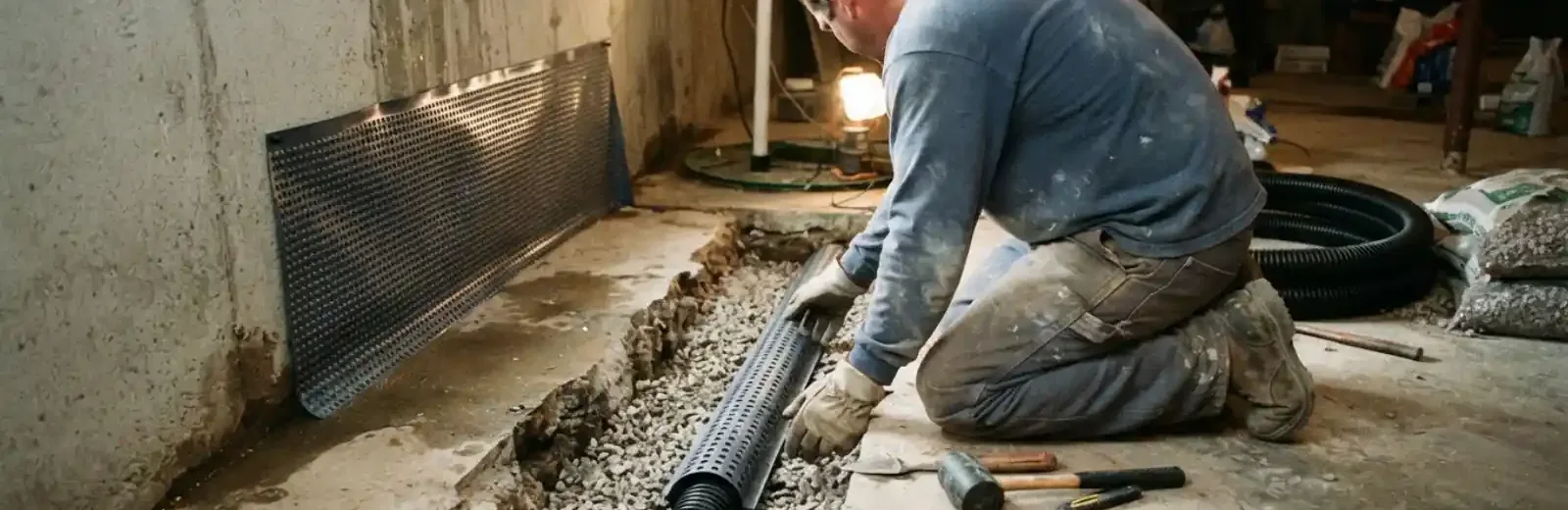
If water still gets in, the next options involve the inside. A perimeter drain tile directs water to a sump pit, where a pump moves it out. Crack injection may stop a single leak, and wall sealers work only against light dampness.
OptionsWaterproofing options compared
| Approach | Fits when | Trade-off |
|---|---|---|
| Gutters, downspouts and grading | Water pools near the foundation | Low cost, but does not fix a high water table |
| Crack injection | A single crack leaks | Does not address other cracks or hydrostatic pressure |
| Interior drain tile and sump | Water enters at the floor-wall joint | Cuts the slab edge, needs a pump and power |
| Exterior excavation and sealing | Wall damage or severe leakage | Most disruptive and most costly |
We are plumbers, and we do the drain, pump and plumbing side of the job. For structural wall repair or exterior excavation, we say so and recommend the right trade.
MoistureDampness, mold and humidity
A basement can be damp without leaking. Warm humid air that meets a cool wall condenses, and a dehumidifier or better ventilation can fix that. The Minnesota Department of Health says moisture and mold go together, and that fixing the moisture source is the way to prevent mold. Cleaning mold without fixing the moisture only buys time.
Champlin contextRiver terraces and a high water table
The Anoka Sand Plain, as the DNR describes it, is level to gently rolling with sandy terraces along the Mississippi, with poorly drained soils in places. Sandy soil lets water move quickly, and low spots can hold it. Homes near the river or creeks often show the problem after snowmelt and heavy rain.
GuidanceGuidance from the university
According to the University of Minnesota Extension, the first line of defense is outside the house, with gutters, downspouts and grading that move water away from the foundation. We start there before we recommend an interior system.
PriceWhat basement water control costs and what changes the price
We schedule basement assessments across 55316 in Champlin and nearby ZIP codes, including 55327 in Dayton, 55303 in Anoka and 55433 in Coon Rapids.
FAQsQuestions About Basement Waterproofing
Where should I start with a wet basement?
Start outside. Make sure gutters, downspouts and grading move water away from the foundation, as the University of Minnesota Extension advises.
Is every wet basement a plumbing problem?
No. Surface water, groundwater, plumbing leaks and sewer backups all look similar, and we help you tell them apart.
Does a sump pump waterproof a basement?
A pump removes water from a pit. It does not seal walls or floors.
Can you fix foundation cracks?
We handle plumbing, drains and pumps. For structural repair, we recommend the right specialist.
Do I need a dehumidifier?
If the basement is damp without leaks, humidity control may help. Fix any moisture source first.