
An active leak is an emergency even when you cannot see it. Water is running somewhere it should not, damage is building, and the meter is counting every gallon. Our 24/7 line is open for leak calls, and we book same-day appointments when available.
While you wait, close the main water shutoff and open a faucet at the lowest level of the house to relieve pressure. Switch off power to any wet area before you touch anything. Photograph the damage and the water meter reading, because both help with insurance and with finding the leak.
Urgent situationsWhen a hidden leak is an emergency
Water is coming through a ceiling or wall
Stained drywall, bubbling paint or drips from a light fixture mean water is moving through the structure. Shut off the main and call right away.
The meter runs with everything off
If every fixture is closed and the meter still turns, water is escaping somewhere between the meter and the faucets.
A warm spot or sound of running water
A warm patch on a floor, or a hiss behind a wall with no fixture in use, is a classic sign of a pressurized line leaking.
A sudden jump in the water bill
A bill that doubles with no change in how the household lives is a reason to test for a leak before the next cycle.
Meter still running or water bill too high
Many leak calls begin with a bill, not a drip. Start with a simple test. Turn off every fixture and appliance that uses water, then look at the meter for a moving dial or a flow indicator.
If it moves, a leak exists. If it stops, the usage is coming from something you can turn off, such as a running toilet or an irrigation zone.
A toilet that leaks into the bowl is the most common hidden cause. Put a few drops of food coloring in the tank, wait fifteen minutes without flushing, and see whether color reaches the bowl. If it does, the flapper is the problem, and our toilet repair service covers it.
For questions about water service on the street side, the City of Champlin Utilities Department lists water service maintenance and location at 763-421-0154. The city's water quality report says its service line inventory contains 8,094 non-lead service lines, 0 lead and 0 unknown as of October 2025. That tells you about materials, not whether a line is leaking, so a meter test and a plumber's check are still the way to find out.
Finding itHow a plumber locates a leak without tearing things apart
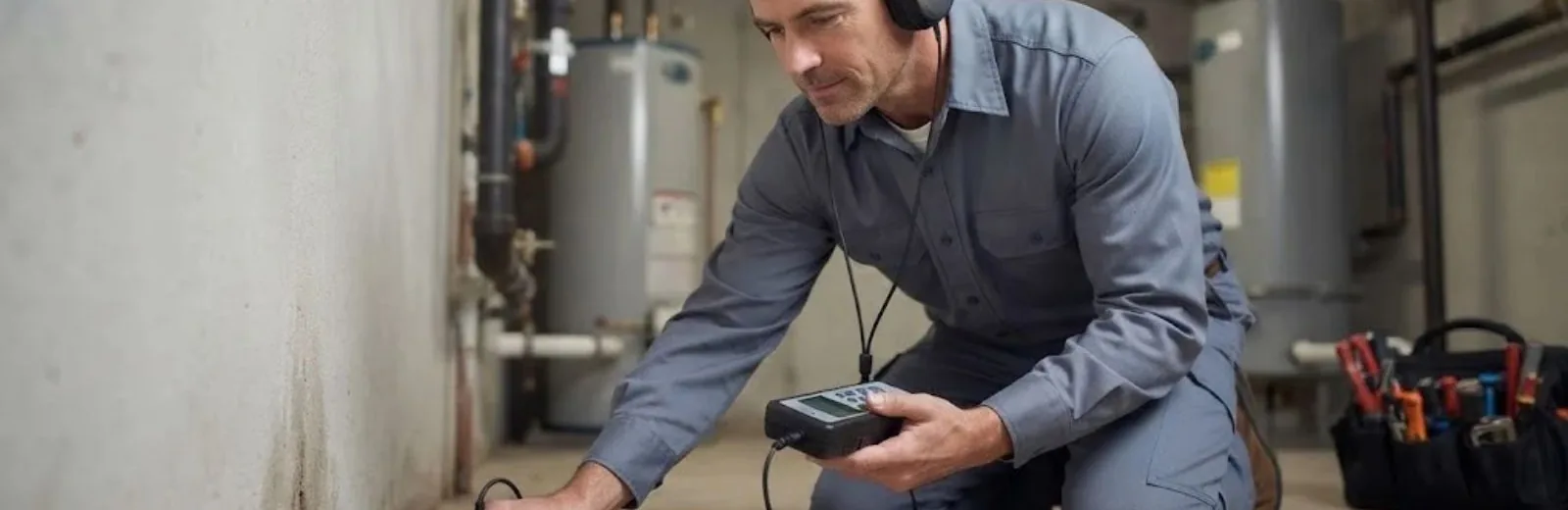
The goal is to open as little as possible. A plumber matches the tool to the symptom. A pressure test shows whether the system holds, and electronic listening equipment hears a leak through concrete or soil. Thermal imaging spots a warm line, a moisture meter maps wet drywall and a pipe locator traces where a line runs.
| Symptom | First step | Why |
|---|---|---|
| Meter turns with fixtures off | Isolate the house from the street line and retest | Separates a street-side leak from an in-house leak |
| Stain on a ceiling | Map moisture, then check the supply and drain above | Water travels, so the stain is rarely under the leak |
| Warm floor or hissing | Listen and use thermal imaging | Pinpoints the pipe before any opening is made |
| Wet yard or driveway | Locate the line and listen along its path | Finds the leak between the meter and the house |
| Low pressure with no cause | Check regulator, shutoffs, then the line | A leak, a bad valve or a clogged fixture can all look alike |
Ceiling, wall and attic leaks
A ceiling stain is a clue, not a location. Water follows framing and drywall before it shows. A supply line, a drain, a shower pan, a roof leak or condensation can each produce the same stain, so the plumber tests which system is wet before cutting.
If the leak is not plumbing, we say so, and you can pass it to a roofer or a restoration company without paying to open the wall twice.
Below the houseBasement, crawlspace and under-house leaks
Most Champlin homes have a basement, and a basement hides leaks in a lot of places. Water at the edge of a wall might be from a supply line, a foundation seep or a sump pump that is not keeping up. Telling these apart saves money, because a groundwater problem is not fixed by a plumbing repair.
If you find water on the floor after a heavy rain with all plumbing off, think groundwater first. Our sump pump service and basement waterproofing page cover that side.
Slabs and buried linesSlab leaks, buried lines and yard leaks
Slab leaks are less common in basement homes than in slab-on-grade houses, but they happen under garages, additions and some ranch-style homes. Symptoms are a warm floor, a hiss, wet carpet at a wall base or a high bill with no visible water. Repair choices include rerouting the line, spot repair through the slab or repiping the run.
The Minnesota DNR describes the Anoka Sand Plain, the landform that includes Champlin, as level to gently rolling with sandy river terraces. In sandy ground, water from a buried leak can soak away instead of pooling, so a dry yard does not prove the line is sound.
Whether a leak sits before or after the meter affects who is responsible for the repair, and a meter test helps show which side it is on. A leak on the line serving the house is a job we cover under water line repair and replacement. Before any digging, call Gopher State One Call at 811 so buried utilities are marked.
Other waterIrrigation, pools and commercial buildings
Irrigation systems leak at valves, heads and buried joints, and the clue is a zone that stays wet or a spring startup that drops pressure. If you have a pool or spa, mention it when you call, because the first question is whether water loss is in the equipment plumbing or in the shell. Shops and offices with after-hours leaks should see our commercial plumbing page.
Public recordsWhat the city says about service lines
According to the City of Champlin's 2026 water quality report, the city's service line inventory as of October 20, 2025 lists 0 lead, 0 galvanized requiring replacement, 0 unknown and 8,094 non-lead lines. That describes the city's inventory. A leak on your side of the meter is still yours to repair.
PriceWhat leak detection costs and what changes the price
Many homeowner policies cover water damage from a sudden leak but not the cost of finding it, and some cover tear-out only in certain cases. Ask your agent before you file, and keep the photos and meter readings you took.
We take leak calls across 55316 in Champlin and nearby ZIP codes, including 55448 and 55433 in Coon Rapids, 55444 and 55428 in Brooklyn Park and 55304 in Andover.
FAQsQuestions About Leak Detection
Do you handle leak detection emergencies at night or on weekends in Champlin?
Yes. The line is open 24/7. We book same-day appointments when available and tell you the price before work starts.
How do I know if I have a slab leak?
Common signs are a warm spot on the floor, the sound of running water with fixtures off, wet carpet at a wall base and a bill that rises with no visible cause. A meter test and listening equipment confirm it.
My water bill doubled. Where do I start?
Turn off all water use and watch the meter. If it moves, there is a leak. If it holds still, look for toilets that run, irrigation zones or a water softener that is cycling too often.
Do you have to cut into the wall to find a leak?
Not usually at first. Pressure tests, moisture mapping and listening narrow the location, and an opening is made only where needed.
Can a leak be on the city side of the meter?
Yes. A leak before the meter is on the city's side. A meter test helps show where the water is going, and the city Utilities Department can talk through water service questions.