
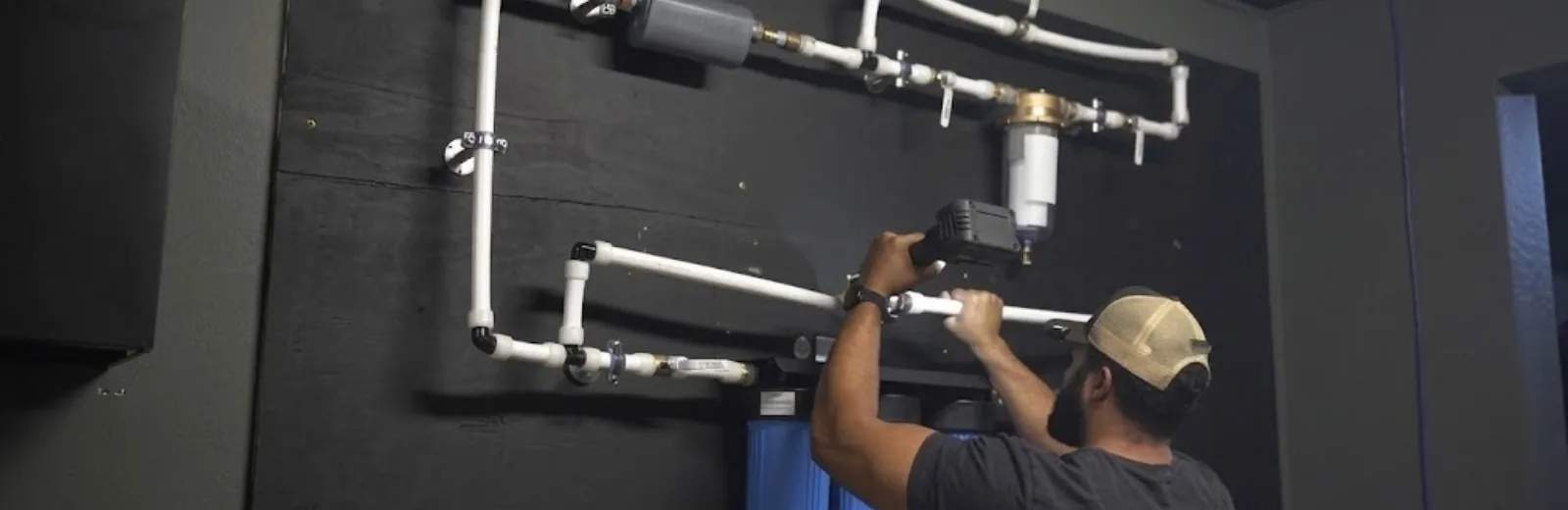
People call about softeners for different reasons. Scale on faucets, spots on glass, short-lived water heaters, dry skin or a softener that stopped working all lead here. Our line is open 24/7 and we book same-day appointments when available, though softener work is usually planned.
Do you need oneStart with your water, not a sales pitch
Champlin's drinking water comes from six city wells, and the city's latest water quality report states disinfectant and fluoride levels but does not give a hardness number. That means the honest first step is to test your own tap, or ask the City of Champlin Utilities Department about hardness.
The U.S. Geological Survey classifies water as soft up to 60 milligrams per liter, moderately hard from 61 to 120, hard from 121 to 180 and very hard above 180. The Minnesota Department of Health says that if hardness is above 7 grains per gallon, or 120 milligrams per liter, you might need a softener.
| Hardness class (USGS) | Milligrams per liter | Typical decision |
|---|---|---|
| Soft | 0 to 60 | A softener is not needed |
| Moderately hard | 61 to 120 | Optional, based on your concerns |
| Hard | 121 to 180 | A softener is worth considering |
| Very hard | More than 180 | A softener is usually worth it |
Demand-based or timer-based
The Minnesota Pollution Control Agency advises replacing timer-based softeners with demand-based ones. A timer unit regenerates on a schedule whether it needs to or not. A demand unit regenerates when the resin is used up, which saves salt and water.
The salt and chloride issueWhat softener brine does to Minnesota water
Softener brine drains to the wastewater system. The Minnesota Pollution Control Agency says wastewater treatment plants cannot remove chloride, and brine from softeners is a source of it. Setting your softener to use less salt is better for local lakes and rivers, and it also saves money.
The Minnesota Department of Health also notes that softening adds sodium to the water, and that water used to regenerate the resin ends up as waste. People on a sodium-restricted diet should ask their doctor.
Softener repairSoftener repair and replacement
Hard water returns
A softener that stops softening may have a depleted or fouled resin bed, a failed valve or a control problem.
Salt bridge or mush
A hardened crust or sludge in the brine tank blocks the cycle. Clearing it is a service call.
Constant running or noise
A valve that does not seat or a control board fault can cause continuous cycling.
Reduced pressure
A clogged resin bed or fouled valve can restrict flow.
If the unit is old, repair costs and age decide whether to replace it. Some callers ask about swapping a softener for an on-demand water heater at the same time. That is a bigger project, and our tankless water heater page explains why hardness matters for it.
FiltrationFiltration for taste, odor and wells
City water in Champlin is disinfected with chlorine and has fluoride added, according to the city's report. A carbon filter or a reverse osmosis system under a kitchen sink reduces taste and odor from chlorine. Whole-house filters are a larger project, and the right one depends on what is in your water.
If your home is on a private well, as most homes in Dayton outside the municipal service area are, treatment starts with a lab test of your own water. A well can have iron, manganese or other minerals that the city treats at its plants and that you would need to treat yourself.
What to doWhat to do before you buy
Test your tap first and write down the result. Ask any seller to explain what the equipment removes and what it adds, including sodium and chloride. Avoid signing anything on the spot, and compare at least two quotes in writing.
If you have a health condition that limits sodium, ask your doctor before choosing softened water for drinking. A plumber can install a separate unsoftened tap at the kitchen sink if that is useful.
PriceWhat softener and filter work costs and what changes the price
We schedule softener and filter work across 55316 in Champlin and nearby ZIP codes, including 55369 in Osseo, 55311 in Maple Grove and 55433 in Coon Rapids.
FAQsQuestions About Water Softener & Filtration
What is the hardness of Champlin water?
The city's latest water quality report does not give a hardness value. Test your tap or ask the City of Champlin Utilities Department.
Do I need a softener?
The Minnesota Department of Health says you might need one if hardness is above 7 grains per gallon or 120 milligrams per liter. Test first.
Are softeners bad for the environment?
Softener brine adds chloride to wastewater, and treatment plants cannot remove it. Demand-based units and lower salt settings reduce the load.
Can you repair a softener you did not install?
Often, yes. Tell us the brand and symptom when you call.
Do I need a filter if I have city water?
Not always. Filters help with taste and odor. Your own preference and a water test decide.