
A damp or wet basement is one of the most common home problems in Champlin, and it is also one of the most misunderstood. People paint sealer on a wall and the water comes back. They buy a dehumidifier and the floor stays wet. Both can be the right move for the right cause and the wrong move for the wrong one.
This guide walks through the do-it-yourself steps in the order that makes sense, from the free ones outside the house to the ones that need a professional.
Step oneFind out where the water is coming from
Before you fix anything, watch the basement for a few rain events. Note whether water appears at the wall, at the floor-wall joint, through the floor or at a window well. Note also how soon after rain it shows up. Water within minutes points at surface drainage, and water a day later points at groundwater.
Also rule out plumbing. A water heater, a supply line or a laundry hose can leak in dry weather. If the basement is wet and it has not rained, read our guide on leak detection before you spend anything on waterproofing.
Step twoStart outside with gutters, downspouts and grading
According to the University of Minnesota Extension, most wet basements are best addressed from the outside first. Gutters should be clean, and downspouts should discharge several feet from the foundation, onto ground that slopes away from the house. A six-inch drop over the first ten feet is a common target for grading.
Check the soil right next to the foundation. Settled soil forms a bowl that holds water against the wall. Adding compacted soil to restore a slope costs little and often solves the whole problem.
- Clean gutters twice a year and after heavy leaf fall.
- Extend downspouts so water lands well away from the wall.
- Re-slope settled soil so it falls away from the house.
- Keep mulch and landscaping from blocking the slope.
- Make sure window wells have clear drainage and a cover.
Seal what you can see
Small cracks in a poured wall can be sealed with a hydraulic cement or an injection kit. These repairs work best on a crack that is not moving and not under heavy water pressure. If water pushes through a crack during storms, a patch may fail because the pressure behind it is greater than the patch can hold.
Wall paints and sealers are meant for dampness, not for leaks. They can hide a problem for a season. They do not stop water that is pushing through the wall.
Step fourManage humidity if the basement is only damp
A basement can feel wet without leaking. Warm humid air meets a cool wall and condenses, especially in summer. A dehumidifier, a fan and a dryer vent that exits the house properly can fix this kind of dampness. The Minnesota Department of Health notes that moisture and mold go together, and that finding the moisture source is the first step in preventing mold.
Cleaning visible mold without fixing the moisture only buys time. If you see mold growing in a large area, treat the wetness first, and consider a professional for large areas.
ComparisonDIY fixes compared
| Fix | Works when | Does not work when |
|---|---|---|
| Gutters and downspouts | Water pools near the wall after rain | The water table is high |
| Re-grading the soil | The ground slopes toward the house | Water enters through the floor |
| Crack sealing | A single stable crack leaks lightly | Pressure pushes water through |
| Wall sealer or paint | The wall is only damp | Water is actively leaking |
| Dehumidifier | Condensation is the cause | Seepage is the cause |
Rather have a plumber look at it?
Describe diy basement waterproofing on the 24/7 line and we explain the next step before any work starts.
When water still comes in: drain tile and a pump
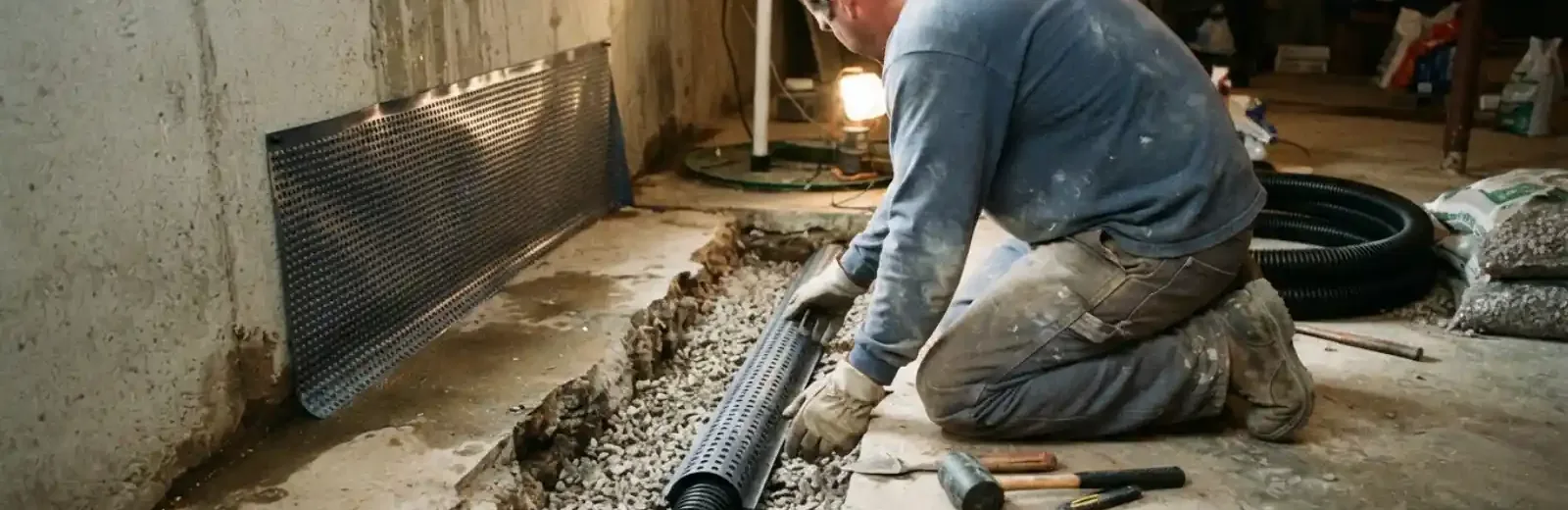
If you fix the outside and water still enters at the floor-wall joint or through the floor, the next step is usually an interior drain that carries water to a sump pit, where a pump discharges it. This is a plumbing job and it involves cutting the edge of the slab. Our sump pump installation and repair page explains what the work involves.
A pump alone does not seal a wall. It removes water that would otherwise stand on the floor. Think of it as a drain with a motor.
Where discharge goesWhere the pump may send the water in Champlin
The City of Champlin's code (Sec. 58-270) directs sump pump discharge to lawn areas outside the right of way, and not to the sidewalk or street. The Metropolitan Council adds that discharge belongs on the ground and not in the sanitary sewer, because clear water overloads the wastewater system. A plumber plans the route with both rules in mind.
Why basements in Champlin behave this way
The Minnesota DNR describes the Anoka Sand Plain as level to gently rolling, with sandy river terraces and poorly drained soils in places. Sandy soil moves water quickly, so a storm can raise the water table fast, and low spots near the Mississippi can stay wet longer.
That is why Champlin basements often show water after snowmelt and heavy rain, and why exterior drainage matters more here than a coat of paint.
Signs the problem is beyond DIY
Water through the floor
Water rising from the slab means groundwater pressure, which needs a drain and a pump.
Repeated flooding
More than one flood in a year calls for a plan, not a patch.
A sump pump that cannot keep up
A pump that runs constantly may be undersized or failing.
Sewage smell or dark water
That points at a drain backup. See drain cleaning.
If you live in Dayton or Brooklyn Park, the same advice applies. Our pages for Dayton and Brooklyn Park list the ZIP codes we serve.
What to doWhat to do during an active leak
When water is coming in, safety comes before repair. Stay out of the basement if outlets, appliances or the panel might be wet. Shut off power at the breaker only if you can reach the panel without stepping in water. Otherwise, call the utility or an electrician.
Move valuables upward, lift stored boxes off the floor and run a wet vacuum if the water is shallow. Photograph the damage for your insurer. Once the immediate danger passes, work through the checks above to find the source.
Basement waterproofing helpGetting a plumber involved
We are plumbers, so we handle the drains, the pit and the pump. For structural wall repair or exterior excavation, we say so and point you to the right trade. Our basement waterproofing page lays out the options and what changes the price. Call (855) 575-2890 if water is rising now, and we will explain the next step.
FAQsWet Basement Questions in Champlin
Is a wet basement common in Champlin?
It is common in parts of town near the river and creeks, where the Anoka Sand Plain's sandy soils let groundwater rise quickly after storms and snowmelt.
Where can I send sump pump water on my Champlin property?
City Code Sec. 58-270 directs discharge to lawn areas outside the right of way, and not to the sidewalk or street.
Will a dehumidifier fix a wet basement?
Only if condensation is the cause. It does not stop seepage.
How far should downspouts extend?
Several feet from the foundation, onto ground that slopes away from the house.
When should I call a plumber?
When water comes through the floor, the basement floods more than once, or a pump runs constantly.