
A leak does not have to flood a floor to cost you. A toilet that runs on quietly or a supply line weeping inside a wall can waste water for months and show up only in a high bill. The steps below help you find where the water is going before you open any walls.
Step oneCheck the water meter
Turn off every fixture and appliance that uses water. Look at your water meter and note the reading or watch the small leak indicator. If it moves with everything off, water is escaping somewhere.
Wait an hour without using water and check again. If the reading has changed, you have a leak. If not, the leak may be intermittent or the fixture-level kind.
Step twoTest the toilets
Toilets are the most common hidden leak. Put a few drops of food coloring in the tank, wait about 15 minutes without flushing and look in the bowl. Color in the bowl means the flapper leaks. A worn flapper is a quick repair, and our toilet repair page covers it.
Step threeLook at visible plumbing
- Check under every sink for wet cabinet floors or drips.
- Look at the base of the water heater for rust or moisture.
- Inspect washing machine hoses for bulges and wet spots.
- Look at exposed pipes in the basement for drips or white mineral crust.
- Check outdoor spigots and hose connections.
Look for signals in the house
Stained ceilings or walls
A brown ring that grows points at a leak above.
Peeling paint or bubbling drywall
Moisture inside a wall pushes the finish outward.
Musty smells
Hidden damp air has a smell even when nothing is visible.
Warm spots on the floor
A leaking hot line under a slab can warm the floor above.
Sounds of running water
Hissing or trickling when nothing is on suggests a pressurized leak.
Decide if the leak is inside or outside
If the meter moves but nothing inside the house shows a leak, the problem may be in the line from the meter to the house. A soft spot in the yard, a patch of greener grass or a drop in pressure supports that. See water line repair for what happens next.
Close the main shutoff in the house and watch the meter. If it still moves, the leak is between the meter and the house. If it stops, the leak is inside.
Rather have a plumber look at it?
Describe how to find a plumbing leak on the 24/7 line and we explain the next step before any work starts.
Is the pressure normal
High pressure strains pipes and fixtures. A gauge that screws onto a hose spigot shows pressure. Many homes target a range recommended by the fixture maker, and a regulator that fails can raise it. If the gauge reads high, a plumber can replace the regulator.
When to callWhen to stop searching and call a plumber
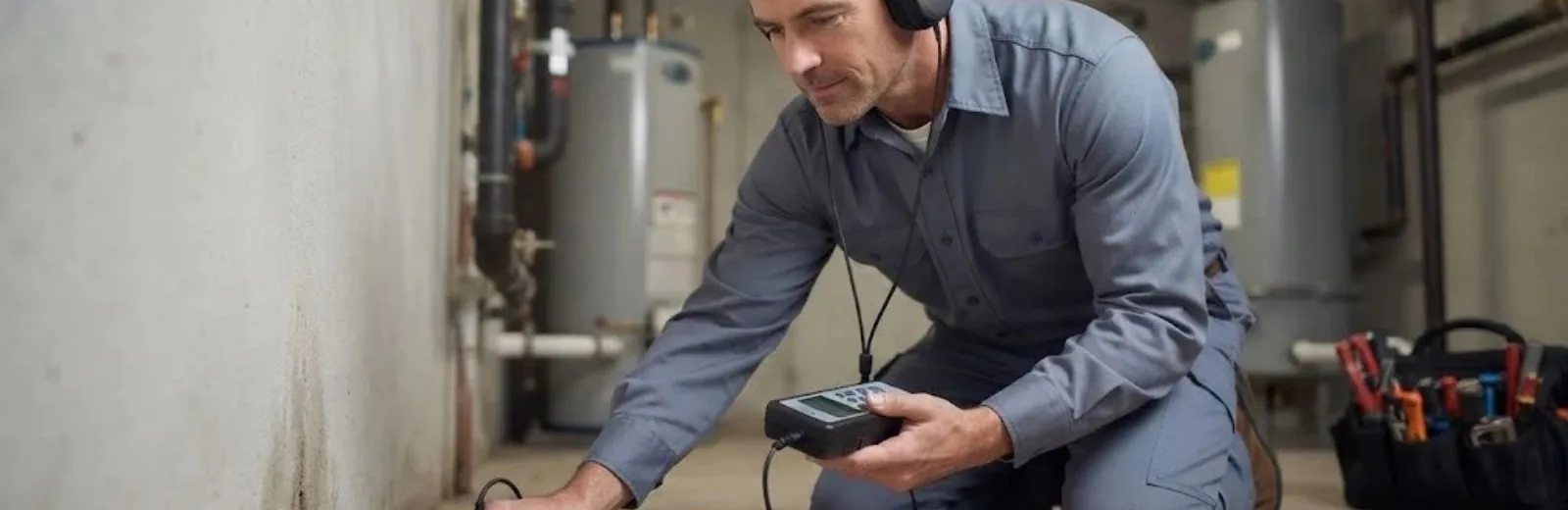
Call when the meter moves but you cannot find the cause, when water appears on a ceiling, when a slab feels warm or when the leak is behind a wall. A plumber's equipment can listen to pipes, trace lines and measure moisture without cutting anything open. Our leak detection page explains the methods.
What Champlin homeowners can know
According to the City of Champlin's 2026 water quality report, the service line inventory has 0 lead, 0 galvanized requiring replacement, 0 unknown and 8,094 non-lead lines as of October 20, 2025. That describes the city's inventory and not the pipes inside your house.
For water service maintenance and location questions, the Utilities Department lists 763-421-0154.
Using sound, touch and temperature
Quiet houses make leaks audible. At night, with everything off, walk through the house and listen near walls, the water heater and the meter. A faint hiss or trickle with no fixture running is a clue. Pressurized leaks hiss, while drain leaks gurgle or drip.
Feel the floor in areas you suspect. A warm patch on a slab can mark a leaking hot water line beneath it. A cool, damp patch near an outside wall may point to a cold line or a foundation leak. Mark the spot with tape and tell the plumber.
What to doWhat to do once you find water
Shut off the water to the fixture or the whole house, then mop up and ventilate. Photograph everything, including the meter reading, before you clean. If the water has soaked drywall or insulation, remove wet material quickly, since mold can start after a day or two.
Write down the date you noticed the leak and any recent high bills. Insurers and utilities often ask for this. If the leak is behind a wall or under a slab, resist the urge to cut it open yourself. Locating it first limits the damage and the repair.
| Clue | Where to look first |
|---|---|
| Meter runs with all water off | Main line, toilets, water heater |
| Bill jumped, nothing visible | Toilets and outdoor spigots |
| Warm floor | Hot water line under the slab |
| Musty smell | Walls near bathrooms and the kitchen |
| Pressure dropped suddenly | Main shutoff, regulator and service line |
Hidden leaks in nearby towns
Dayton homes on a private well often reveal leaks as a pump that never rests, which is a different symptom from a high bill. See Dayton for how we handle those calls. In Anoka, older supply lines are a common cause, and Anoka has its own page.
If you suspect a leak, call (855) 575-2890. We explain what we would test first and give you the price before work starts.
FAQsLeak Questions in Champlin
How do I know if I have a hidden leak?
Turn off all water and watch the meter. If it moves, water is escaping.
Who do I call about the line at the street?
The City of Champlin Utilities Department lists water service maintenance and location at 763-421-0154.
Will a running toilet raise my bill?
Yes. It wastes water quietly.
Can a leak be under my slab?
Yes. A warm spot or a running meter without visible signs can point to it.
Is the city water lead-free?
The city's inventory lists 0 lead service lines as of October 20, 2025. That says nothing about your interior pipes.