
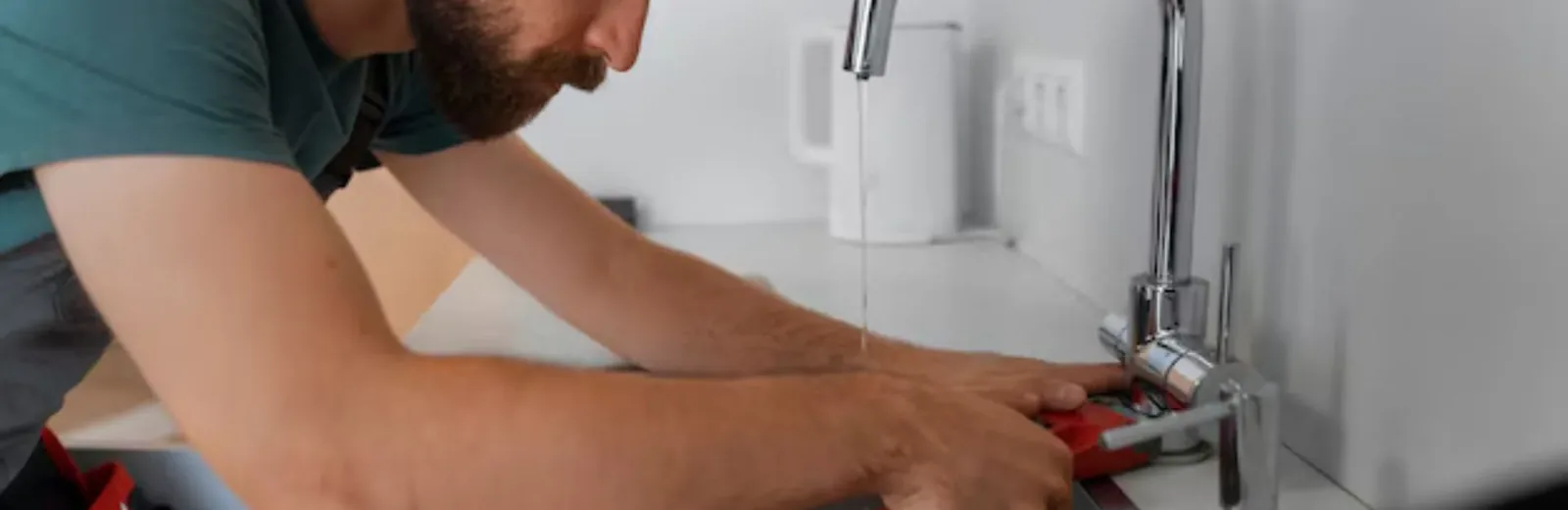
Installing a new sink is a job many homeowners can do, and it is also a job that fails in predictable ways. A leak under the sink often goes unnoticed for weeks and then shows up as a soft cabinet floor. This guide explains the three systems at the sink, which are the supply, the drain and the vent, and what to check before you close the cabinet door.
The supplySupply lines and shutoff valves
Every sink should have a shutoff valve for hot and cold under it. These small valves let you stop the water at the fixture and not at the main. If your sink has none, install them while the old fixture is out.
Braided stainless supply lines connect the valves to the faucet. Tighten them by hand and then a quarter turn with a wrench. Overtightening cracks washers and causes the very leak you are trying to avoid.
The faucetMounting the faucet
Mount the faucet to the sink or the countertop before you set the sink in place, because access is far easier. Follow the manufacturer's instructions for the gasket and the nuts. Kitchen faucets with pull-down sprayers need the weight attached to the hose, and touchless models need power. If the faucet is the part that has failed, see faucet repair.
The drainThe drain: strainer, tailpiece and P-trap
The basket strainer seats in the sink drain opening with plumber's putty or a gasket. A tailpiece drops from it into the trap. The P-trap holds a small plug of water that blocks sewer gas from the room.
The trap must be installed in the right direction, with the curve holding water. Slip joints should be hand tight with the washers facing the correct way. Over-tightened plastic nuts crack.
Set the strainer
Seat the basket strainer with putty or gasket and tighten the nut from below.
Attach the tailpiece
Connect it to the strainer and measure to the trap arm.
Assemble the trap
Fit the P-trap so it aligns with the wall drain without strain.
Test
Run water and check every joint with a dry paper towel.
Why the vent matters
A sink drain needs a vent so air can enter behind the water as it leaves. Without it, the trap can be sucked dry and the sink drains slowly or gurgles. Minnesota's plumbing code sets the rules for venting and trap arm length, and the City of Champlin lists the 2020 Minnesota State Plumbing Code on its building codes page.
If your remodel moves a sink to a new wall, the vent probably has to move too. That is a good point to bring in a licensed plumber.
PermitsPermits and who may do the work
Permit requirements vary by project, so ask the Champlin building inspections division what applies to yours. The phone number is 763-421-2629. For work done by a contractor, you can check the license through the Minnesota Department of Labor and Industry before you hire.
| Common mistake | What happens | Fix |
|---|---|---|
| Overtightened supply nut | Washer cracks and drips | Replace the line and tighten gently |
| Reversed trap | The trap does not hold water | Reinstall with the curve correct |
| No vent on a moved sink | Gurgling and slow drains | Add or relocate the vent |
| Putty missing at the strainer | Leak at the sink drain | Reseat the strainer |
| Valves left stuck | No shutoff in an emergency | Replace old valves |
Rather have a plumber look at it?
Describe how to install sink plumbing on the 24/7 line and we explain the next step before any work starts.
If the sink drains slowly after you install it
A slow drain right after installation usually means the trap is misaligned, a vent is missing or debris from the project is in the line. If the drain is slow elsewhere in the house, the problem may be farther down the line, and drain cleaning can address it.
A Champlin note
Champlin's water comes from six city wells, and the city's report does not list a hardness value. If your faucet aerators clog quickly, mineral buildup may be the reason, and a tap test will tell you more than a guess.
Tools and parts to gather first
Gathering everything before you start prevents the mid-job trip to the hardware store that leaves a kitchen without water overnight. Manufacturer guidelines list the parts that come with the faucet and the drain, and they list what you must buy separately.
- Adjustable wrench and a basin wrench for faucet nuts.
- Plumber's putty or gaskets for the drain strainer.
- New braided supply lines in the right length and thread.
- A P-trap kit with the right diameter for your drain.
- Teflon tape for threaded joints where the maker calls for it.
- A bucket and towels for the water left in the trap.
When to call a plumber instead
Calling a plumber makes sense when you move a fixture, need a new vent, find corroded valves or pipe, or want the work done to code with an inspection. A remodel with several fixtures is a job for our plumbing installation service.
We work across Champlin and nearby towns such as Anoka and Coon Rapids. Call (855) 575-2890 and describe the project. We explain what we would do and the price before work starts.
FAQsSink Installation Questions in Champlin
Do I need a permit to replace a sink in Champlin?
Simple replacement may not need one, but moving plumbing may. Ask the Champlin building inspections division at 763-421-2629.
Why does my sink gurgle after I moved it?
It probably lacks proper venting. A plumber can add or relocate the vent.
How tight should supply lines be?
Hand tight plus about a quarter turn with a wrench.
Can I reuse old shutoff valves?
Only if they still close fully. Stuck or leaking valves should be replaced.
Is my Champlin water hard?
The city's report gives no hardness value. Test your tap.