
The sewer line is the pipe that carries everything from your house to the public main. It is out of sight, so people tend to notice it only when it fails. The good news is that it usually gives warnings first.
This guide covers the most common signs, what each suggests and what to do when you see them.
Sign oneMultiple drains slow or gurgle at the same time
One slow sink is a local clog. Several fixtures misbehaving at once points to the shared line. A toilet that gurgles when the washer drains, or a tub that bubbles when you flush, are classic signs.
When a cleaning only helps for a few weeks and the problem returns, the cause may be a defect such as a root intrusion, a sag or a cracked joint. See sewer line cleaning for how a main line is cleared.
Sign twoSewage smell indoors or in the yard
A sewer smell near a floor drain can come from a dry trap, which is easy to fix by running water. A smell that persists, or one outside near the line, can mean a broken pipe. Gas from sewer lines can be unpleasant and should not be ignored.
Sign threeWet, sunken or unusually green patches in the lawn
Leaking sewer pipe feeds the lawn above it. A soggy patch, a sink hole or a strip of greener grass along the line's path suggests a break. Keep children and pets away from any soft ground.
Sign fourBackups in the lowest drain
Wastewater seeks the lowest exit. Water or sewage in a basement floor drain or laundry standpipe, especially in dry weather, points to a blockage or break in the main line.
Repeated backups
A line that backs up again within weeks usually has a defect.
Foundation or slab changes
A leaking line can wash out soil and cause settling.
Rodents or insects
Cracks in the pipe can let pests in.
Roots in the drain
Roots found in cleanings mean a joint is open.
A camera shows the answer
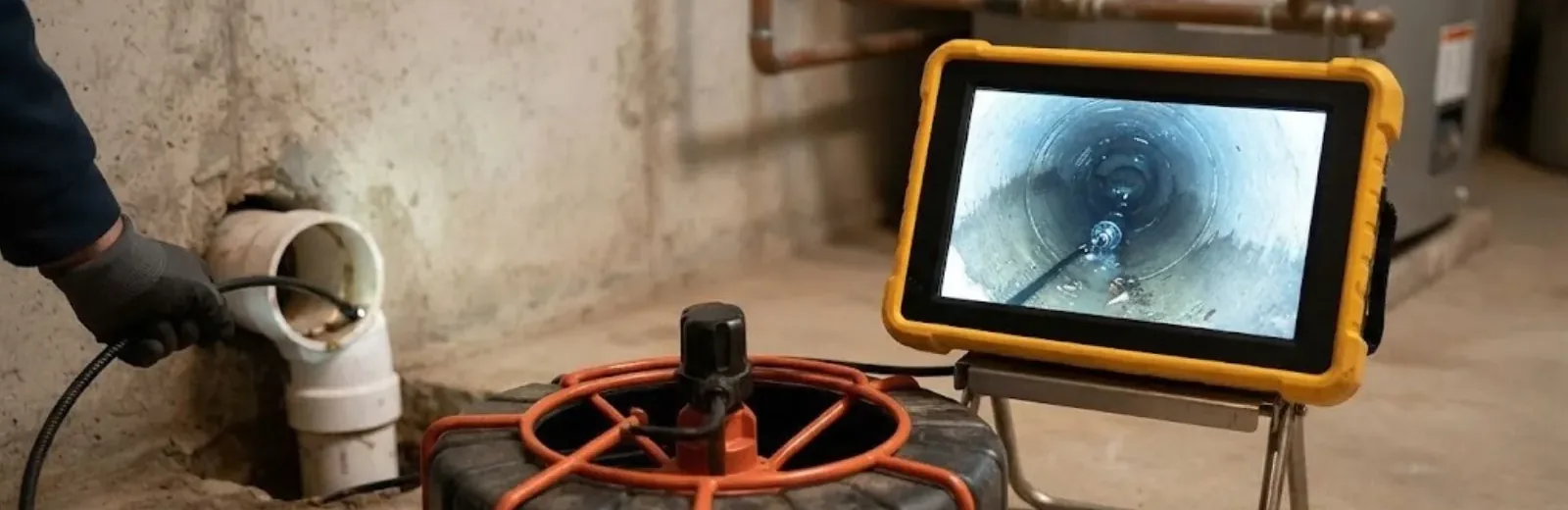
Guessing is expensive. A sewer camera shows cracks, offsets, roots and sags in real time. With a locator, the plumber marks the problem's depth and location above ground. Our sewer inspection page explains the process and what you receive.
Rather have a plumber look at it?
Describe signs you need sewer line repair on the 24/7 line and we explain the next step before any work starts.
What happens if the camera finds damage
| Finding | Typical repair |
|---|---|
| Localized crack | Spot repair or sleeve |
| Several cracked joints | Cured-in-place lining |
| Collapsed or crushed pipe | Excavation and replacement |
| Deep sag | Regrade or replace the section |
| Roots only | Cleaning, then monitor or repair |
See sewer line repair for how these options compare and what drives the price.
Who owns which part
According to the City of Champlin, its Utilities Department maintains the public sanitary sewer, and the Metropolitan Council operates the regional system that carries wastewater to the Metro plant. The line from your house to the connection is yours. A camera shows where a defect sits, which helps when you need to talk to the city.
How pipe material affects the signs
What you see depends on what the pipe is made of. Older clay pipe sits in short sections with many joints, so roots find their way in. Cast iron corrodes from the inside and can scale until the opening narrows. Cement fiber pipe can soften and crush over the years.
Plastic pipe from newer homes usually fails differently, through a sag from poor bedding or a crushed section from construction traffic. The camera tells you what you have, and the material guides the repair.
Cost of waitingWhat waiting usually costs
A small crack with roots is a small repair. Left alone, the roots grow, the crack widens, soil washes into the pipe and a sag forms. Repairs that could have been a short section turn into a longer one, and sewage that leaks into the soil can create a sinkhole near a foundation.
None of this means you must act on the first gurgle. It means you should find out what is wrong while it is small. A camera inspection is a modest first step, and our sewer inspection page explains it.
What to do nowIf you see these signs
Reduce water use
Hold off on laundry and long showers if drains are slow.
Do not use chemical cleaners
They sit in a full pipe and make a later repair more hazardous.
Record what you see
Note dates, which fixtures and any smells.
Call a plumber
Ask for a camera inspection before you agree to a repair.
We serve homes across Champlin and in nearby towns such as Coon Rapids and Brooklyn Park. Call (855) 575-2890 and describe what you are seeing.
FAQsSewer Line Questions in Champlin
Who is responsible for the sewer line in Champlin?
The City of Champlin Utilities Department maintains the public sanitary sewer. The line from your house to the connection is the owner's.
Can a sewer line be repaired without digging?
Often. Spot sleeves and lining can fix some defects without trenching.
Is a gurgling drain always a sewer problem?
No. A single fixture may only have a local clog.
How do I find my cleanout?
Look for a capped pipe in the basement, crawl space or yard. A plumber can help.
Is sewer line damage covered by insurance?
Policies vary. Ask your agent before you start repairs.