
A sink that holds water after you have cleaned the trap and the stopper is frustrating. It feels like the pipe should be open, and yet nothing moves. In most cases the blockage has simply moved downstream, or the drain is starved of air. This guide goes through the causes in the order a plumber would check them.
First checkIs it only this sink
Run water in the other fixtures and see what happens. If only one sink is slow, the problem sits in that fixture's own branch. If the bathtub, the toilet or the laundry also misbehave, the problem is shared, and you are looking at the main drain.
Also listen. Gurgling in a nearby drain when you empty the sink means air is being pulled through the wrong path, and that can point at a venting problem or a partial blockage.
Cause oneA clog past the trap
The trap is the first place most people look, and it is often clear. The blockage can sit in the horizontal pipe behind the wall or in the vertical stack. A plunger on a sink with an overflow hole needs the overflow sealed with a wet rag, or the pressure just escapes.
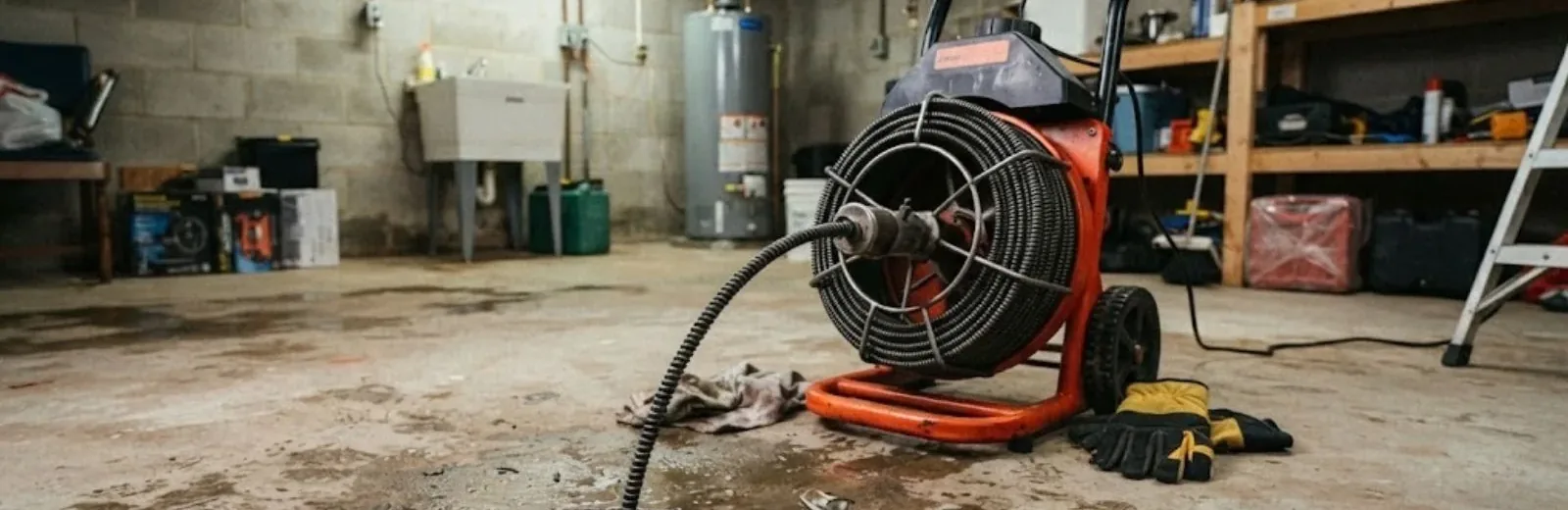
A hand auger can reach several feet into the branch. If the auger meets a soft obstruction or pulls up greasy sludge, you have found the clog. If it stops at a hard barrier, stop and call a plumber.
Cause twoA vent problem
Drains need air behind the water. A blocked vent, which can be clogged by leaves, a bird nest or ice at the roof, makes water drain slowly and noisily. Sinks that drain in a slow, lumpy, gurgling way, with a sucking sound, often have a vent issue.
Venting problems are tricky to confirm without a camera or a smoke test. A plumber can check the vent path from the roof or the attic.
Cause threeGrease and soap buildup
Kitchen drains narrow over time as grease coats the pipe wall and traps food. Bathroom drains do the same with soap, hair and toothpaste. The pipe is not blocked, but its opening has shrunk, so water that used to flow now crawls.
A cable can punch a hole through this kind of buildup, but the coating remains. Hydro jetting scours the wall and restores the diameter.
| Symptom | Likely cause | Next step |
|---|---|---|
| Slow in one sink only | Branch clog past the trap | Hand auger or plumber |
| Gurgling and slow | Vent restriction | Plumber checks the vent |
| Slow everywhere | Main line restriction | Sewer line cleaning |
| Returns within weeks | Grease or scale on pipe wall | Jetting |
| Foul smell and slow | Dry trap or broken pipe | Inspect with a camera |
Rather have a plumber look at it?
Describe sink not draining but not clogged on the 24/7 line and we explain the next step before any work starts.
A problem in the main line
When every drain in the house slows, the main line is restricted. Roots, a sag, a cracked joint or scale can all be to blame. Water in the lowest drain, usually in a basement floor drain, is a warning that the line is full.
A camera run through the cleanout shows the reason. If it finds damage, sewer line repair covers the options. If it finds buildup, cleaning is the next step.
What not to doSkip chemical drain cleaners
Caustic cleaners sit in a standing pipe and can burn skin when a plumber opens the line later. They can also damage older pipes. A plunger and a hand auger are safer first tools. If you have already used a chemical product, tell the plumber before they open the drain.
A Champlin note
According to the city's report, Champlin's water comes from six wells, and no hardness value is listed. Hard water leaves scale in drains over years, and it can narrow a branch that once flowed freely. A tap test tells you whether scale is likely in your home.
What to do before the plumber arrives
Stop using the sink and any fixtures that share its line. Bail out standing water so it does not sit and smell. Clear the space under the sink so the plumber can reach the trap and shutoff valves.
Take a photo of the drain level, and note when the problem started and what changed. A new garbage disposal, a recent remodel or a heavy cooking session all matter. This history helps us decide where to start.
When to callWhen to stop and call
The auger will not pass
You may have hit a break, a bend or a hard blockage.
Several fixtures are slow
That is a main line issue.
Sewage smell or dark water
Treat the area as contaminated.
Water rises in the basement drain
The line is full downstream.
Our drain cleaning service handles all of these, and we explain what we find on camera. We serve Champlin, Brooklyn Park and Dayton. Call (855) 575-2890 and describe what the sink is doing.
FAQsSlow Sink Questions in Champlin
Why won't my sink drain if I cleaned the trap?
The blockage is probably past the trap, or the drain is not getting air through its vent.
Can I use a plunger on a sink?
Yes, with the overflow sealed with a wet rag.
Is a slow drain always a clog?
No. Venting problems and scale narrowing can mimic it.
Do hard water deposits clog drains?
Over years, yes. Test your tap, since the city's report gives no hardness value.
Is chemical cleaner safe?
We advise against it. It can harm pipes and hurt whoever opens the line later.